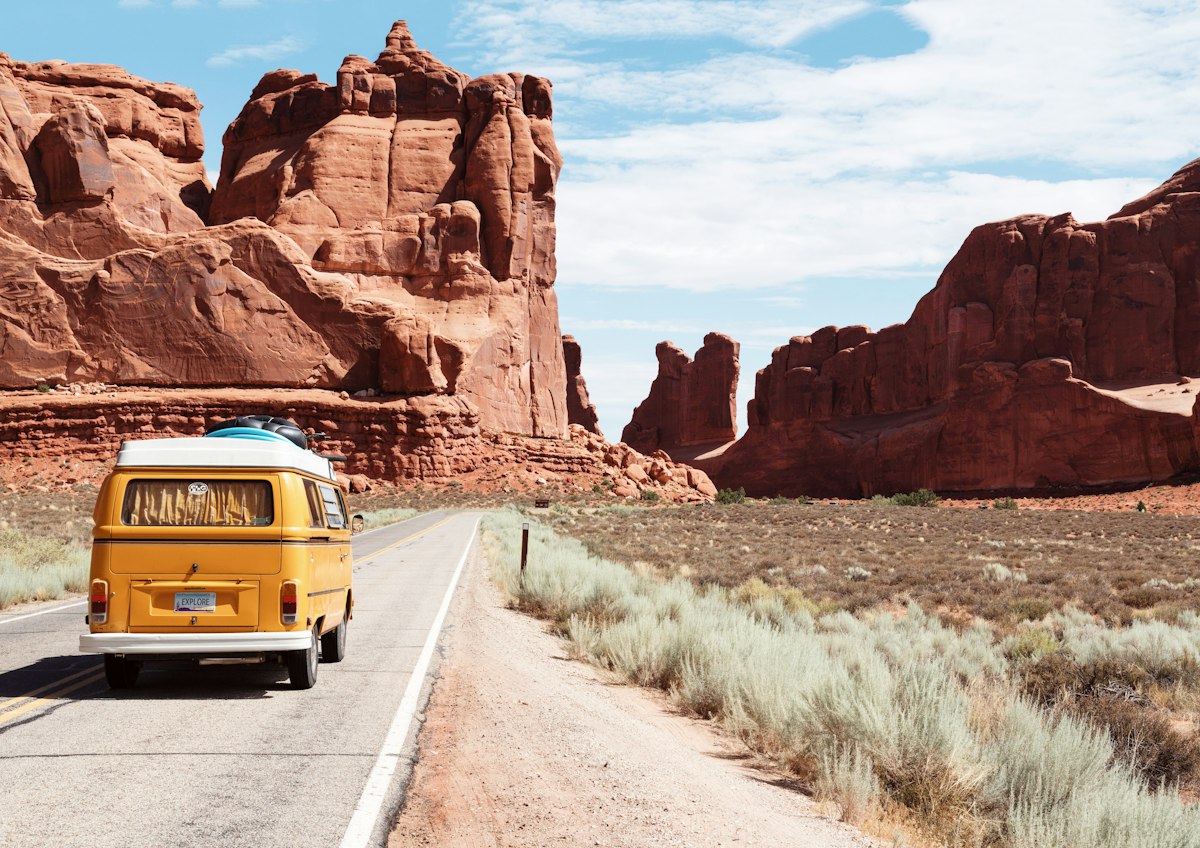
There is an enduring romance to the American road trip. While interstate freeways are built for speed and efficiency, the nation’s National Scenic Byways and historic two-lane highways are designed for wonder.
From coastal cliffs and high mountain passes to ancient desert canyons, these four legendary scenic drives reward travelers with unforgettable vistas and a deeper connection to the American terrain.
1. Going-to-the-Sun Road (Glacier National Park, Montana)
Stretching 50 miles through the heart of northern Montana’s Glacier National Park, Going-to-the-Sun Road is widely regarded as an engineering marvel and one of the most breathtaking alpine drives on Earth.
- The Route: Connecting West Glacier to St. Mary across the Continental Divide via Logan Pass (elevation 6,646 feet).
- Key Sights:
- Lake McDonald: Montana’s largest glacial lake, famed for its crystal-clear waters and colorful rainbow pebbles.
- The Loop & Weeping Wall: Sharp switchbacks carved directly into sheer cliff faces where glacial meltwater cascades onto passing vehicles in early summer.
- Logan Pass Visitor Center: The highest point on the road, where alpine meadows bloom with glacier lilies and mountain goats frequently graze alongside hiking paths leading to Hidden Lake Overlook.
- Trip Planning: Because of heavy winter snowpack, the alpine section of the road is typically only fully open from late June or early July through mid-October. Vehicle reservations are required during peak summer months via Recreation.gov.
2. Pacific Coast Highway / Highway 1 (Big Sur, California)
Clinging to the rugged edge where the Santa Lucia Mountains meet the crashing Pacific Ocean, California’s Highway 1 through Big Sur provides some of the most celebrated coastal driving anywhere in the world.
- The Route: The quintessential Big Sur section runs roughly 90 miles between Carmel-by-the-Sea in the north and San Simeon in the south.
- Key Sights:
- Bixby Creek Bridge: An iconic single-span concrete arch bridge completed in 1932, soaring 260 feet above a dramatic coastal canyon.
- McWay Falls at Julia Pfeiffer Burns State Park: An 80-foot waterfall that cascades directly onto a pristine white-sand cove below.
- Pfeiffer Beach: Celebrated for Keyhole Rock, offshore sea stacks, and unusual purple-tinted sands caused by manganese garnet deposits.
- Safety Tip: Highway 1 is susceptible to winter landslides and seasonal closures. Always check Caltrans road condition reports (QuickMap) before embarking on your drive.
3. Blue Ridge Parkway (Virginia & North Carolina)
Known as “America’s Favorite Drive,” the Blue Ridge Parkway meanders for 469 continuous miles through the Appalachian Highlands, connecting Shenandoah National Park in Virginia to the Great Smoky Mountains National Park in North Carolina.
- The Route: Built as a public works project during the Great Depression, the Parkway is intentionally designed without commercial billboards, traffic lights, or commercial trucking.
- Key Sights:
- Mabry Mill (Milepost 176): A picturesque, water-powered 1908 gristmill offering live blacksmithing demonstrations and traditional buckwheat pancakes.
- Linville Falls (Milepost 316): A powerful multi-tiered waterfall cascading through the rugged Linville Gorge wilderness.
- Grandfather Mountain & Linn Cove Viaduct (Milepost 304): An s-curved elevated bridge that snakes around the granite face of Grandfather Mountain to protect the fragile alpine ecology.
- Speed & Pacing: With a strict speed limit of 45 mph (frequently lower in curves), this drive is meant for slow, contemplative travel. Dedicate at least 3 to 4 days to experience the full route comfortably.
4. Utah Route 12 Scenic Byway (Garfield & Wayne Counties, Utah)
Cutting across southern Utah’s slickrock canyons and red-rock plateaus, Utah State Route 12 (the “Journey Through Time Scenic Byway”) spans 122 miles between Panguitch and Torrey.
- The Route: Linking Bryce Canyon National Park at its western gateway to Capitol Reef National Park at its eastern end.
- Key Sights:
- Red Canyon & Bryce Canyon Gateway: Drive through dramatic natural red-rock arches carved out of Claron limestone hoodoos.
- Grand Staircase-Escalante National Monument: Stop at the Head of the Rocks Overlook for endless views of colored Navajo sandstone canyons stretching to the horizon.
- The Hogback: A heart-stopping section where the road traverses a narrow knife-edge ridge with sheer 1,000-foot drop-offs on both sides of the roadway.
- Visitor Tip: Combine this drive with a stay in Boulder, Utah, home to the award-winning Hell’s Backbone Grill, which serves farm-to-table cuisine sourced from high-desert gardens.
Essential Road Trip Preparation
Before setting off on any remote scenic highway:
- Download Offline Maps: High-altitude passes and deep canyons frequently have zero cellular reception. Save entire regional map areas offline in Google Maps or your preferred navigation app.
- Monitor Fuel and EV Charging: Scenic highways often have 50- to 80-mile stretches without gas stations or fast chargers. Fuel up whenever your tank drops below half.
- Carry Emergency Supplies: Pack extra drinking water, high-protein snacks, a flashlight, a basic first-aid kit, and seasonal blankets in your trunk.
Pairing these routes with stopovers in charming small towns across the country transforms a simple drive into an immersive vacation. Explore more scenic itineraries in our Travel & Places archive.
1 thought on “Scenic Drives Worth Adding to a US Road Trip”