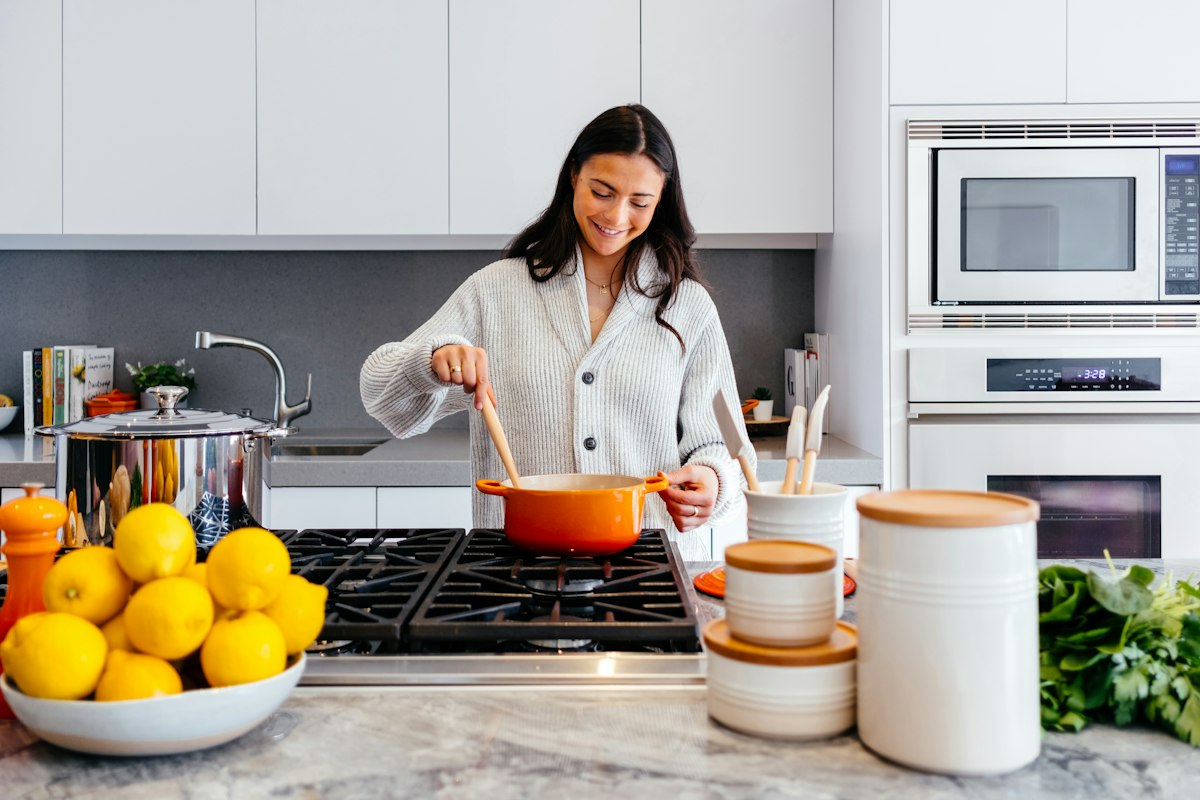
Cooking in a compact kitchen does not have to feel like a continuous battle against clutter. Whether you are outfitting an urban apartment kitchen, a cozy historic bungalow galley, or a studio kitchenette, the key to an efficient cooking space lies not in square footage, but in intelligent vertical utilization and workflow zoning.
With a few thoughtful organizational adjustments, you can eliminate countertop congestion, speed up meal preparation, and make even the smallest kitchen feel orderly and open.
1. Exploit Vertical Wall and Backsplash Space
The most underutilized real estate in any compact kitchen is the vertical zone between your countertops and upper cabinetry.
- Magnetic Knife Strips: Countertop wooden knife blocks occupy valuable prep territory and gather dust. A wall-mounted stainless steel or walnut magnetic knife bar frees up 8 to 10 inches of prime counter surface while keeping your primary chef’s knives instantly accessible.
- Hanging Rail Systems: Install an industrial steel rail (such as an IKEA Kungsfors or similar system) along your backsplash. Hang S-hooks for measuring cups, ladles, spatulas, and small wire baskets for garlic, ginger, and commonly used spice jars.
- Under-Cabinet Stemware and Mug Hooks: Screw subtle brass or matte-black hooks into the underside of upper cabinets to hang mugs or install slide-in racks for wine glasses.
2. Introduce Shelf Risers Inside Deep Cabinets
Standard kitchen cabinets typically have wide gaps between fixed shelves, resulting in huge pockets of wasted vertical air space.
- Wire and Acrylic Risers: Instead of precariously stacking bowls of different sizes on top of plates, insert two-tier expandable shelf risers. This doubles your plate-stacking surface and allows you to slide individual dishes out without unstacking the entire pile.
- Under-Shelf Wire Baskets: These clip-on metal wire baskets slide directly onto any existing shelf without screws or tools. They create an instant low-profile mezzanine perfect for storing cloth napkins, tea towels, parchment paper rolls, or flat baking sheets.
3. Decant and Uniform Your Pantry Storage
Packaging from grocery stores is designed for supermarket shelves, not space efficiency. Bulky cardboard cereal boxes, loose pasta bags, and oversized flour sacks create chaos and trap dead space in small pantries.
- Airtight Stackable Containers: Transfer dry staples—rice, lentils, flour, rolled oats, and coffee—into clear modular square or rectangular containers (such as OXO Good Grips or glass jars). Square containers maximize every millimeter of cabinet depth compared to round jars.
- Labeling for Speed: Use a simple label maker or chalk paint pen to note the item name and cook time or expiration date on the base of the jar.
4. Reclaim Cabinet Doors and Dead Corners
Every cabinet door has two sides, yet most homeowners only utilize the exterior.
- Over-the-Door Organizers: Mount lightweight wire racks on the interior side of under-sink or pantry cabinet doors. They are ideal for holding dish soaps, scrub brushes, cutting boards, or plastic wrap rolls.
- Adhesive Lid Holders: Pot and pan lids are notorious space hogs that rattle around inside drawers. Stick adhesive plastic lid mounts on cabinet doors to store lids flat and out of the way.
- Lazy Susans (Turntables) for Corner Cabinets: Deep corner cabinets and high shelves often become culinary black holes where spices and canned goods expire unseen. A two-tiered turntable brings back-corner items to the front with a gentle spin.
5. Implement the “Active Countertop” Rule
The golden rule of small-kitchen ergonomics is simple: Countertops are for food preparation, not permanent appliance storage.
- The Daily Rule: Only keep appliances on the countertop if you use them every single day (e.g., your electric kettle or espresso machine).
- Relocate Occasional Appliances: Food processors, stand mixers, slow cookers, and waffle makers should be stored on lower cabinet shelves or in a nearby hall closet until needed.
- Over-the-Sink Cutting Boards: Invest in an oversized butcher block cutting board designed to sit squarely over your kitchen sink basin. This instantaneously creates 2 to 3 square feet of auxiliary prep space whenever your main counters are occupied.
Summary Checklist for Small Kitchen Flow
- Clear Flat Surfaces: Keep cutting and plating zones 100% free of mail, keys, and clutter.
- Group by Activity: Keep oils, salts, and tasting spoons within arm’s reach of the stove; store glassware near the refrigerator and sink.
- Audit Annually: Donate duplicate baking pans, novelty gadgets (egg slicers, single-use garlic peelers), and mismatched plastic containers that take up precious space.